

Off Mains Drainage Installation in West Sussex and South East
Peachy Services installs sewage systems for properties not connected to mains sewers. We handle septic tanks, sewage treatment plants and cesspits across West Sussex, East Sussex, Surrey, Kent, Hampshire and South London.
From site survey through to commissioning and Building Control sign-off, we manage the complete project. Over 20 years installing drainage systems, plus our own fleet of tankers for ongoing maintenance once your system is operational.
Systems we install

Cesspits
Sealed holding tanks with no outlet. All wastewater is stored until tanker removal. Used where neither septic tanks nor treatment plants are permitted, or where site constraints rule out other systems. Highest running costs due to frequent emptying, often monthly for occupied homes.

Septic Tanks
Two-chamber tanks providing primary sewage treatment. Solids settle, partially treated wastewater drains into the ground via a soakaway or drainage field. Works for properties with free-draining soil and adequate land for infiltration. Annual emptying required.
Treatment Plant
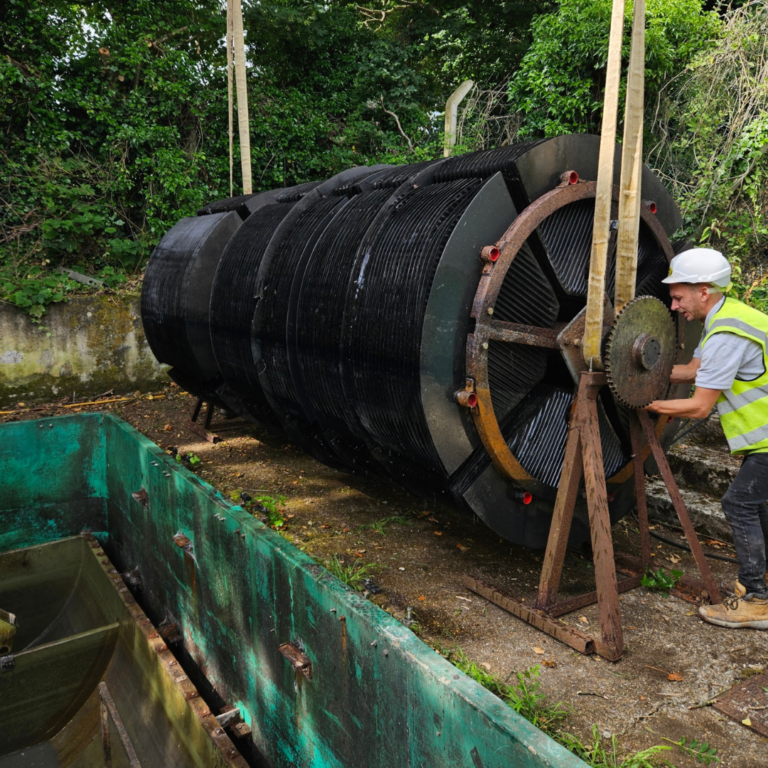
Mechanical systems treating wastewater to higher standards than septic tanks. Required where soil won't support drainage fields, where environmental regulations are stricter, or for direct discharge to ditches or watercourses. Usually, the only compliant option in sensitive locations or commercial properties.
When you need off mains drainage installation
Your property requires an independent sewage system if it’s not connected to the public sewer network. Rural homes, commercial sites on agricultural land, new developments in villages without infrastructure or properties where mains connection costs are prohibitive.
Replacement systems become necessary when existing tanks or cesspits fail, when property extensions increase wastewater volume beyond current capacity, or when regulatory changes mean your old system no longer complies.
The right choice depends on site conditions, wastewater output and local authority permissions. We assess all of this during the survey.
Our installation process
1. Site Survey
We visit to assess ground conditions, check soil percolation rates where relevant, measure distances to boundaries and watercourses, identify access routes for plant and tankers, and review constraints like underground services or protected trees. Commercial properties require wastewater volume calculations based on occupancy and business type.
2. System Design
Survey findings inform the design to meet Building Regulations Part H and Environment Agency requirements. Tank sizing, positioning for separation distances, drainage field layout where applicable, and confirmation of General Binding Rules compliance or permit conditions.
3. Groundworks
Tank chamber excavation, installation of your chosen sewage system, connection to existing waste pipework, soakaway or drainage field construction where needed, backfilling, then surface reinstatement. Building Control inspections coordinated at required stages.
4. Commissioning
Treatment plants require biological process establishment and discharge parameter confirmation. Septic tanks and cesspits are operational once connected. You receive maintenance guidance, emptying schedules and compliance documentation for Building Control and the Environment Agency.
Compliance requirements
Unsure about the relevant compliance requirements for where you reside and what you require? Our expertise can take those worries away from you.
All off mains drainage installations must meet Building Regulations Part H. We notify Building Control before starting work and arrange inspections at excavation and completion stages. Systems can’t be used until Building Control issues completion certificates.
Ground or watercourse discharge triggers Environment Agency General Binding Rules. These set standards for system location, design and operation. Most domestic installations comply if correctly sized and sited at least 50 metres from water supply sources and 10 metres from watercourses. Non-compliant systems require bespoke environmental permits.
Source Protection Zones, designated watercourses and environmentally sensitive areas have stricter requirements. The Environment Agency may mandate treatment plants rather than septic tanks, or specify tighter discharge limits.
Planning permission isn’t usually required for like-for-like system replacements. New installations on undeveloped land or work affecting listed buildings often need consent. We flag this during site surveys where applicable.
Installation service deliverables
- Site survey and ground assessment
- System design to Building Regulations Part H
- Building Control notification and liaison
- Tank or treatment plant supply
- Full groundworks and excavation
- Waste pipework connection
- Drainage field or soakaway construction (where required)
- Treatment plant commissioning
- Ground reinstatement
- System-specific maintenance guidance
- Recommended emptying schedule
- Environment Agency compliance documentation
- Manufacturer warranty (terms vary by model, typically several years)
Why choose Peachy Services for off mains drainage installation
We’ve installed and maintained sewage systems for over 20 years. We know how different soil types behave, what works in restricted access situations, how to size systems for real usage rather than estimates, and what Building Control and the Environment Agency expect.
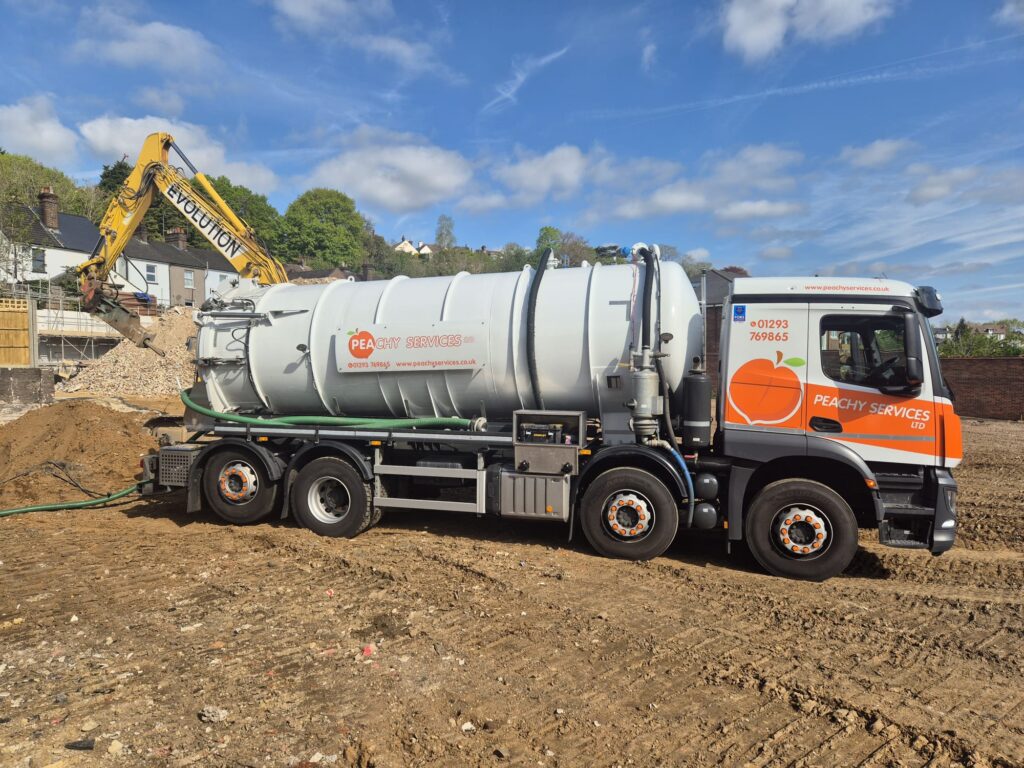
Our tanker fleet handles maintenance once your system is operational. One company for installation and ongoing service, with engineers who already know your site.
We cover Sussex, Surrey, Kent, Hampshire and South London. Residential properties and commercial sites. Fast quotes and realistic lead times.
Installation FAQs
How long does sewage system installation take?
Most domestic projects complete within two to five days once we start on site. This covers excavation, tank installation, property connection and reinstatement. Commercial properties or restricted access sites take longer. Material lead times depend on system type, usually one to two weeks for standard tanks and treatment plants.
Do I need planning permission for drainage system installation?
Not usually for like-for-like system replacements. New installations on previously undeveloped land or work affecting listed buildings often require planning consent. We assess this during site surveys.
What's the difference between a septic tank and a sewage treatment plant?
Septic tanks provide basic treatment and discharge partially treated wastewater into ground. Treatment plants use mechanical and biological processes for higher standard cleaning before discharge. Treatment plants cost more upfront but are often required where soil conditions are poor or environmental regulations stricter.
How often does my system need emptying?
Septic tanks and treatment plants typically need annual emptying, more frequently for high-occupancy properties. Cesspits require much more frequent emptying, usually monthly for standard households. We provide maintenance schedules tailored to your system and usage after installation.
Will my existing soakaway work with a new system?
Not always. Soakaways become blocked or fail over time, particularly if previous systems were undersized or poorly maintained. We assess existing drainage infrastructure during site surveys and recommend replacement if necessary.
Can I install an off mains drainage system myself?
No. Installation must comply with Building Regulations Part H, requiring Building Control notification and inspections during work. DIY installations won’t pass inspection and can trigger enforcement action. You also need proper plant for excavation and safe handling of large tanks.
What if my ground is clay or waterlogged?
Clay soils and high water tables prevent standard septic tank installations because ground won’t absorb treated effluent. Sewage treatment plants with watercourse or drainage ditch discharge are usually the only option, subject to Environment Agency consent.
Do you provide warranties on installation work?
Tanks and treatment plants come with manufacturer warranties, typically several years depending on model. Our installation workmanship is also guaranteed. Terms are confirmed in quotes.
Which system is best for commercial properties?
Depends on wastewater volume, discharge permissions and site conditions. High-output businesses often require sewage treatment plants to meet stricter environmental standards. We calculate daily wastewater loads during commercial site surveys and recommend systems sized appropriately.
Peachy Services Ltd
- Kilmarnock Farm, Charlwood Rd, Crawley RH11 0JY
- info@peachyservices.co.uk
- 01293 769865